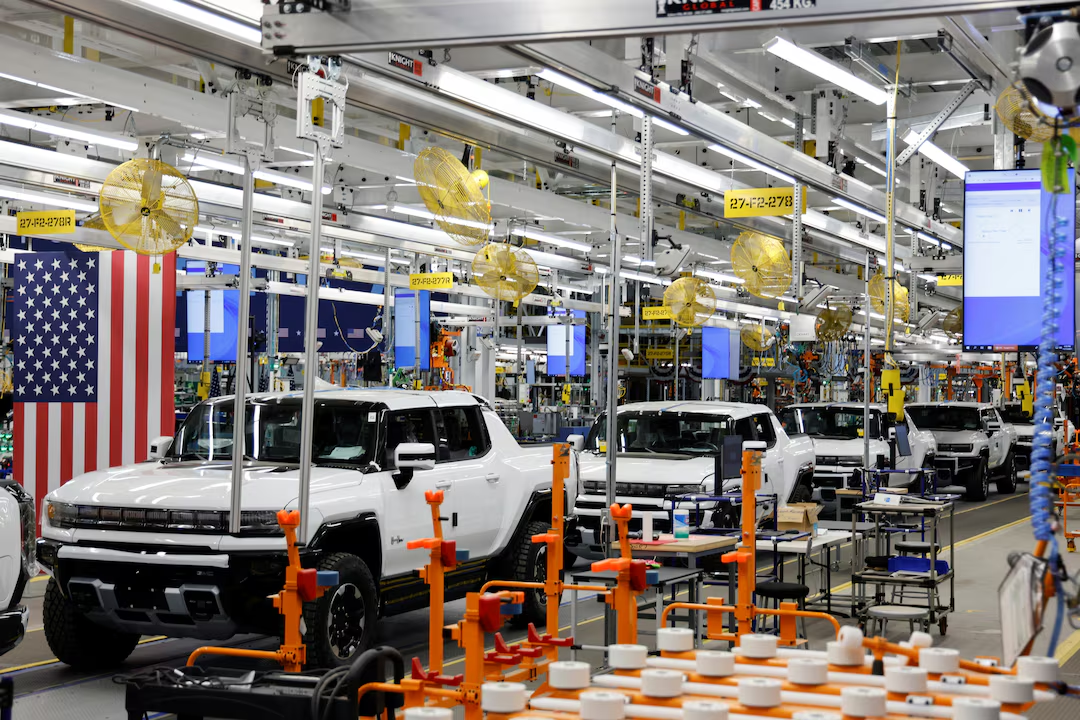
General Motors will take a $6 billion charge to scale back its electric vehicle investments. The decision follows slumping demand and U.S. policy shifts.
The Trump administration ended the $7,500 federal EV tax credit on September 30, 2025. This move sharply cooled buyer interest.
According to a regulatory filing, the charge comes from cutting EV production plans. It also reflects supply chain fallout.
Notably, $4.2 billion is a cash charge. It covers contract cancellations and settlements with suppliers. These partners had prepared for much higher output.
Despite this, GM says its current U.S. EV lineup remains intact. The automaker offers about a dozen models—the most in the U.S. “We plan to keep making these models,” it stated.
Moreover, GM will book the charge in Q4 earnings. It expects smaller charges in 2026 as supplier talks continue.
In contrast, Ford recently announced a $19.5 billion writedown. It canceled several EV programs, including future electric trucks and vans.
Indeed, EV sales have dropped since the tax credit expired. GM’s Q4 EV deliveries fell 43% from the previous quarter.
Sales had surged earlier in 2025 as buyers rushed to claim the credit. But momentum has now stalled.
As a result, industry-wide EV growth slowed. Omdia reports just a 1.2% sales increase in 2025.
Edmunds forecasts EVs will make up only 6% of U.S. auto sales in 2026. That’s down from 7.4% in 2025.
Meanwhile, GM is shifting resources away from pure EVs. It paused battery production at two joint-venture plants for six months.
It also cut Detroit EV factory output to one shift. And it scrapped plans for a new Michigan EV plant. Instead, it will build gas-powered Escalades and pickups there.
Additionally, GM recorded a $1.1 billion charge for its China joint venture restructuring. This adds to a $1.6 billion EV writedown from Q3 2025.
Critically, analysts warn GM’s lack of hybrids could hurt it. “GM’s lack of hybrid exposure could reverse recent market share gains,” said CFRA analyst Garrett Nelson. Hybrid demand is rising fast.
Looking ahead, CEO Mary Barra says GM will follow customer demand. The company may slow its push toward an all-electric future by 2035. The goal stands—but execution is adapting.
READ: Dangote-Marketers Fuel Deal Collapses Over Pricing Dispute