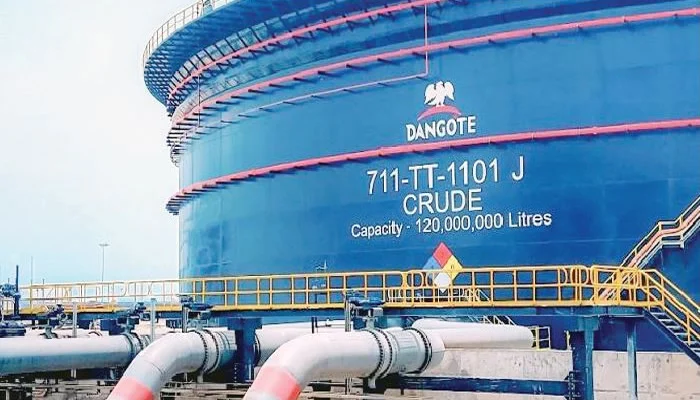

Dangote Petrol Sales have returned to naira after the Dangote Petroleum Refinery reversed its brief dollar-denominated pricing policy, blaming fuel importers for allegedly withholding petrol supplies in anticipation of higher prices. The refinery said the decision aims to prevent fuel scarcity and stabilise prices in Nigeria’s downstream petroleum sector.
The latest Dangote Petrol Sales policy follows concerns raised by marketers and government officials after the refinery temporarily switched to dollar transactions, creating uncertainty in the fuel market.
Dangote Petrol Sales Resume in Naira
The Dangote Petrol Sales reversal was confirmed by a refinery management official, who said the company acted in the national interest after observing that some importers were deliberately holding back fuel stocks.
According to the official, the refinery decided to resume selling Premium Motor Spirit (PMS) in naira to discourage speculation and prevent artificial shortages.
He explained that the refinery’s decision was not because crude oil supply challenges had ended but because market conditions required urgent intervention.
The official added that importers expected petrol prices to rise and delayed releasing available products into the market.
Importers Allegedly Hoarded Fuel Supplies
The refinery accused some fuel importers of withholding petroleum products while anticipating higher prices.
Management said the alleged hoarding created the risk of supply disruptions that could have triggered another round of fuel scarcity across the country.
Officials maintained that resuming Dangote Petrol Sales in naira would improve product availability and reduce pressure on consumers already facing rising living costs.
The refinery stressed that the move reflects its commitment to maintaining stability in Nigeria’s fuel supply chain.
Crude Supply Challenges Persist
Despite returning to naira transactions, the refinery disclosed that its crude oil supply concerns remain unresolved.
Earlier, Dangote Refinery switched to dollar-denominated petrol sales after it reportedly stopped receiving sufficient crude oil through the Federal Government’s naira-for-crude arrangement.
The company explained that it had to source additional crude from international suppliers using US dollars, making dollar pricing necessary at the time.
Management said discussions with the Federal Government are still ongoing and expressed hope that both parties would reach a sustainable agreement.
Marketers Welcomed the Policy Reversal
Independent petroleum marketers had suspended petrol loading from the refinery after the introduction of dollar sales, arguing that they could not easily obtain the foreign exchange required for purchases.
The refinery’s return to naira pricing is expected to improve accessibility for marketers and restore smoother product distribution across Nigeria.
Under the revised pricing structure, the refinery fixed the gantry price of petrol at ₦1,215 per litre, while the coastal price stands at ₦1,602,495 per metric tonne.
Industry analysts believe the decision could help moderate volatility in fuel supply and reduce uncertainty in the downstream market.
Dangote Criticises Nigeria’s Import System
The refinery also criticised Nigeria’s long-standing dependence on petroleum imports despite being one of Africa’s largest crude oil producers.
According to the company, some interests still prefer exporting Nigeria’s crude oil before importing refined petroleum products back into the country.
Before the commencement of refinery operations in 2024, Nigeria relied almost entirely on imported petrol because government-owned refineries in Port Harcourt, Warri and Kaduna remained largely inactive.
That dependence contributed to recurring fuel shortages, rising subsidy costs and persistent pressure on public finances.
Refinery Seeks Stable Fuel Market
The refinery believes the return of Dangote Petrol Sales in naira will support market stability while ongoing discussions with the Federal Government continue.
Industry observers say resolving crude supply arrangements remains critical to ensuring uninterrupted refinery operations and sustaining domestic fuel production.
As Nigeria continues reforms in the downstream petroleum sector, stakeholders will closely monitor negotiations between the refinery and the government to determine the long-term future of domestic fuel pricing.
The latest Dangote Petrol Sales decision underscores the refinery’s growing influence on Nigeria’s petroleum market and highlights the importance of stable crude supply policies in ensuring affordable fuel for consumers.