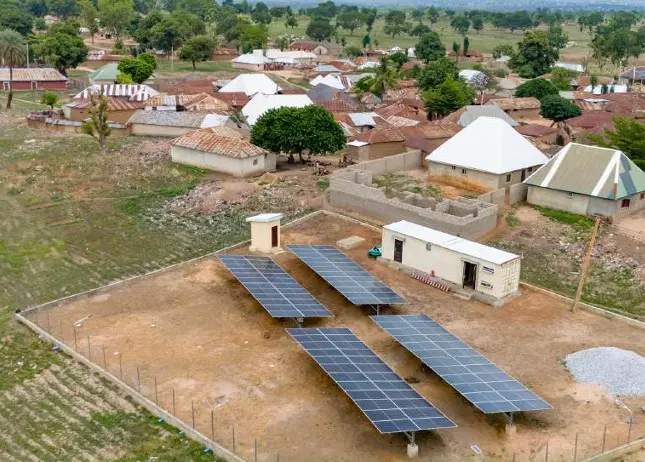
ABUJA — REA solar manufacturing is set to play a central role in Nigeria’s drive to close its electricity deficit after the Rural Electrification Agency (REA) announced plans to establish 3.7 gigawatts (GW) of local solar photovoltaic (PV) panel manufacturing capacity by the end of 2027.
The ambitious initiative is expected to reduce Nigeria’s dependence on imported renewable energy equipment while strengthening local manufacturing, creating jobs, attracting foreign investment and accelerating electricity access for millions of underserved Nigerians.
Managing Director of the Rural Electrification Agency, Engr. Abba Aliyu, unveiled the plan during a benchmarking visit by officials of the Zanzibar Utilities Regulatory Authority (ZURA) in Abuja, describing local production as a major pillar of the country’s renewable energy transformation.
According to Aliyu, the REA solar manufacturing programme is designed to encourage leading global solar equipment manufacturers, particularly Chinese companies, to establish production facilities in Nigeria.
He revealed that locally assembled solar panels are already being exported from Lagos to neighboring Ghana, demonstrating that Nigeria is gradually developing the capacity to become a regional manufacturing hub for renewable energy equipment.
Aliyu said expanding local production will reduce the country’s reliance on imported solar panels, lower project costs, strengthen domestic supply chains and improve the availability of renewable energy components across the country.
He explained that rapid technological innovation and declining prices of solar panels and lithium batteries have transformed renewable energy into one of the cheapest and most practical solutions for electrifying rural and underserved communities.
The REA boss noted that Nigeria’s electricity access rate currently stands at 61.2 percent, leaving approximately 80 million people without reliable electricity supply.
He said addressing the country’s huge energy deficit requires innovative approaches beyond expanding the national electricity grid alone.
As part of that strategy, the agency has adopted a least-cost electrification model, which determines the most suitable electricity solution for each community based on cost, location and demand.
Rather than relying solely on transmission infrastructure, the model combines solar home systems, mini-grids and conventional grid extension to maximize electricity coverage.
Aliyu disclosed that REA has already mapped more than 700,000 communities across Nigeria using advanced geospatial technology to guide electrification planning and investment decisions.
According to the agency’s roadmap, approximately 45 percent of the identified communities will receive electricity through solar home systems, while 31 percent will benefit from mini-grid installations. The remaining 24 percent will be connected through expansion of the national electricity grid.
The REA solar manufacturing initiative is expected to complement these electrification programmes by ensuring locally produced solar panels are readily available for deployment across the country.
Aliyu also revealed that the agency has developed one of Africa’s largest electricity geospatial databases, containing detailed information on more than 51,000 health facilities, 11,000 markets, thousands of schools, factories, dams, electricity feeders and existing mini-grid projects.
He said the database provides valuable information for investors, development partners and policymakers, helping them identify communities with the greatest electricity needs while reducing project planning costs.
Beyond expanding electricity access, the REA is also prioritising communities that currently receive fewer than six hours of electricity daily, ensuring that existing consumers benefit from more reliable and sustainable power supplies.
Aliyu warned that electricity demand in Nigeria will continue to increase significantly due to rapid population growth, urbanisation, industrial expansion and the rising adoption of digital technologies such as artificial intelligence, cloud computing and data centres.
He stressed that meeting future energy demand will require substantial investments in renewable energy infrastructure alongside improvements in the national grid.
Industry stakeholders believe the REA solar manufacturing programme could transform Nigeria into one of Africa’s leading renewable energy production centres.
Local manufacturing is expected to stimulate technology transfer, create thousands of skilled jobs, reduce pressure on foreign exchange reserves and improve the competitiveness of Nigeria’s renewable energy industry.
Experts also believe domestic production will shorten supply chains, reduce delays associated with imported equipment and encourage greater private-sector participation in off-grid electrification projects.
The initiative aligns with Nigeria’s broader economic diversification agenda, which seeks to promote local industrialisation while reducing dependence on imports across critical sectors.
If successfully implemented, the REA solar manufacturing strategy could significantly improve electricity access, support rural development, strengthen energy security and position Nigeria as a regional supplier of solar energy equipment across West Africa.
With millions of Nigerians still lacking reliable electricity, the REA believes local solar manufacturing will be instrumental in expanding affordable clean energy, supporting economic growth and accelerating the country’s transition to a more sustainable and resilient power sector.