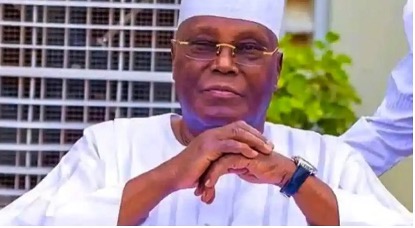
The proposed Atiku fuel subsidy intervention has triggered fresh questions from the All Progressives Congress Presidential Campaign Council (APC-PCC), which is demanding details about the legal framework, financing and practical operation of the plan.
Atiku Abubakar, presidential candidate of the African Democratic Congress (ADC), has proposed government support for locally refined petrol as a way of reducing pump prices and easing pressure on consumers.
The APC-PCC, however, says the proposal requires clearer explanations, particularly on how government assistance to refineries would translate into lower prices at filling stations.
Table of Contents
- APC Challenges Atiku Fuel Subsidy Proposal
- Legal Questions Under Petroleum Industry Act
- APC Raises ₦17trn–₦21trn Cost Estimate
- How Crude Discounts Could Affect Revenue
- Atiku’s Earlier Position on Subsidy
- Government Promotes CNG and Electric Transport
- Key Questions Surrounding the Proposal
APC Challenges Atiku Fuel Subsidy Proposal
APC-PCC spokesman Dele Alake said Atiku should explain the legal and fiscal basis of his proposed intervention.
According to Alake, the proposal raises questions about whether a refinery receiving government support would be required to sell petrol at a specific price.
The APC-PCC argues that if refiners are required to sell at a prescribed price, the legal authority for imposing such a condition needs to be established.
If no such requirement exists, the council questioned how government support to refiners would guarantee lower prices for consumers.
The issue is particularly significant because the proposed Atiku fuel subsidy is being presented as a mechanism for reducing petrol prices rather than simply providing financial assistance to producers.
Legal Questions Under Petroleum Industry Act
The APC-PCC referred to Section 205(1) of the Petroleum Industry Act 2021, which provides for wholesale and retail petroleum prices to be determined under unrestricted free-market conditions.
The Nigerian Midstream and Downstream Petroleum Regulatory Authority (NMDPRA) has also stated that it does not ordinarily fix petrol pump prices or issue administrative pricing templates except where statutory conditions for intervention are met.
The APC-PCC therefore wants Atiku to explain whether his proposal would require changes to the existing petroleum-sector framework.
The council also argued that a National Assembly appropriation could authorise government spending but would not necessarily settle all regulatory questions under the PIA.
APC Raises ₦17trn–₦21trn Cost Estimate
Another major issue raised by the APC-PCC is the potential financial cost.
Alake estimated that the proposed intervention could cost between ₦17 trillion and ₦21 trillion annually, depending on factors including the size of any crude discount, the volume covered and whether the support applied to crude production generally or only to petrol supplied to the domestic market.
The figures are estimates presented by the APC-PCC and are not an independently established cost of Atiku’s proposal.
For the cost to be properly assessed, the proposal would need to specify the subsidy rate, eligible refineries, volume covered, duration and maximum annual government expenditure.
These details would also make it possible to determine how the policy would affect Nigeria’s wider fiscal position.
How Crude Discounts Could Affect Revenue
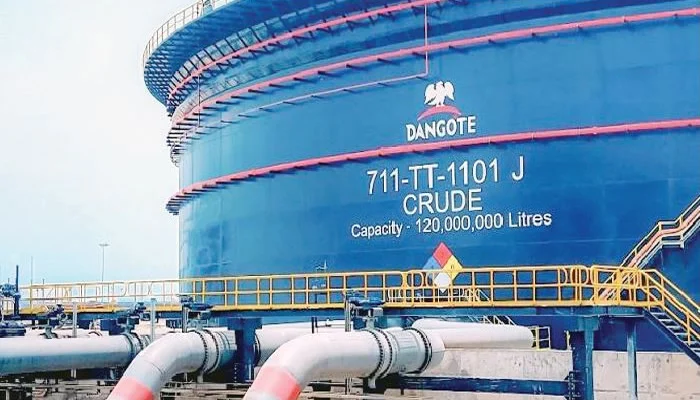
The APC-PCC said Atiku’s proposal could involve providing crude oil to domestic refineries at preferential prices.
The council argued that selling crude below its applicable market value could reduce the revenue accruing to the Federation.
Such an arrangement would raise questions about how the federal, state and local governments would account for any reduction in expected petroleum revenue.
The APC-PCC has consequently asked Atiku to explain the proposed funding source and the safeguards that would prevent diversion, smuggling or fraudulent subsidy claims.
The council also wants details of the mechanism that would ensure any savings from government support are passed on to consumers.
Atiku’s Earlier Position on Subsidy
The controversy also centres on Atiku’s previous public position on petroleum subsidy.
The APC-PCC cited comments attributed to Atiku in November 2022, when he reportedly supported completing the removal of petrol subsidy.
In August 2026, however, Atiku said he would restore subsidy if elected president.
Atiku’s current position focuses on supporting domestic production and refining, rather than simply recreating the previous system.
The APC-PCC has nevertheless challenged him to explain how the new proposal differs from the problems associated with the former subsidy regime and how it would operate under the country’s current petroleum laws.
Government Promotes CNG and Electric Transport
The APC-PCC also defended the federal government’s alternative approach to reducing transportation costs.
Alake pointed to compressed natural gas (CNG) conversion and electric public transportation programmes being implemented in different parts of Nigeria.
According to the APC-PCC, more than 120,000 vehicles have been converted to CNG, while additional vehicles have been converted privately.
The council also cited reduced fares on selected CNG and electric-bus routes in several states.
These figures were presented by the APC-PCC as evidence that alternative-energy transportation can reduce the impact of high petrol prices without returning to a broad petrol subsidy system.
Key Questions Surrounding the Proposal
The Atiku fuel subsidy debate now centres on several unresolved policy questions.
Among them are the legal authority for the intervention, the proposed subsidy rate, the number of refineries that would qualify, the volume of crude or petrol covered, the source of funding and the mechanism for ensuring that consumers benefit from lower prices.
There is also the question of how any preferential crude arrangement would affect government revenue and whether additional legislative or regulatory changes would be necessary.
For Nigerians to fully assess the proposal, these details would need to be clearly defined.
The debate also reflects a broader disagreement over how Nigeria should respond to high petrol and transportation costs: through direct intervention in the petroleum market or through alternative energy, transportation and broader economic measures.
With the 2027 presidential election approaching, petrol pricing, domestic refining and the future of subsidy policy are expected to remain prominent issues in Nigeria’s political and economic debate.