Talks Underway with China’s Exim Bank
Nigeria is in talks with China’s Export-Import Bank for a $2 billion loan to build a new super grid. The project aims to reduce chronic power shortages that have long hindered economic progress.
Impact of Power Deficits
Frequent power deficits, blackouts, and unreliable supply raise production costs, disrupt businesses, and weaken investor confidence. The proposed loan represents a strategic effort to modernize grid networks and expand capacity.
Sectors Affected by Poor Electricity
The agriculture, manufacturing, and service sectors all suffer from erratic electricity supply. A robust super grid would create strong infrastructure that supports expansion and competitiveness.
Challenges in the Power Sector
Nigeria’s power sector has faced decades of stress. Legacy debts owed to power generation companies continue to accumulate. System losses and inefficiencies reduce revenue. Upgrading grid infrastructure can help reverse these problems.
Project Assessments and Feasibility
The proposed loan must pass through feasibility studies, environmental and social impact assessments, project design reviews, and repayment assurance. These steps will confirm viability and sustainability.
Utility and Governance Concerns
The government must ensure that state utilities and distribution companies can manage upgraded assets effectively. Weak governance, poor metering, and billing inefficiencies could limit the benefits unless addressed together.
Alignment with National Infrastructure Agenda
This China-backed financing aligns with Nigeria’s broader infrastructure push under President Tinubu. His administration prioritizes roads, ports, telecoms, and especially energy, which has the strongest multiplier effect on economic growth.
Debt and Risk Management
Critics warn that large foreign loans increase debt obligations and foreign exchange risk. The government must identify repayment sources—through tariff reforms, improved collections, and public revenues—to keep the loan sustainable.
Phased Execution of the Project
If approved, the super grid will be executed in phases:
- Construction of backbone transmission lines
- Interconnectors linking regions
- Integration of renewable generation sources
The design should accommodate future capacity expansion.
Public-Private Partnership Approach
To ensure success, the government should adopt public–private partnerships (PPPs) for parts of the project. Private investors can bring efficiency, maintenance expertise, and shared financial risk.
Tariff Reforms and Cost Recovery
Tariffs must be recalibrated for cost recovery. Although politically sensitive, gradual rate adjustments with protections for vulnerable households can secure the grid’s financial sustainability.
Scaling Up Metering
Accurate metering is essential to prevent revenue leakage through electricity theft or nonpayment. The project should integrate smart meters, prepaid billing, and remote monitoring from the start.
Strengthening Distribution Companies
Nigeria’s distribution companies (DisCos) remain the weakest link. They face losses, theft, capacity shortages, and poor maintenance. Strengthening them requires training programs, accountability systems, and regulatory oversight.
Integrating Renewable Energy
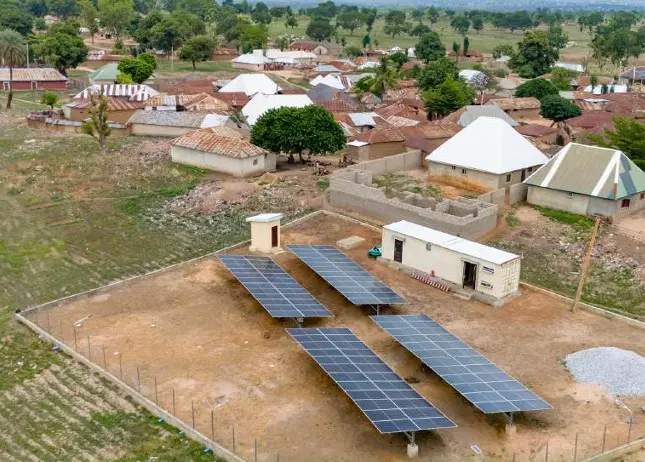
The super grid should be built to incorporate renewable energy sources such as solar and wind. This approach will reduce diesel reliance and improve sustainability.
Funding and Project Continuity
The government must allocate counterpart funds and guarantee continuity across administrations. Interruptions or delays can raise costs and extend timelines.
Expected Economic Impact
Once completed, the improved grid will reduce outages, lower production costs, and attract new investments to industrial zones. Over time, it could boost GDP, enhance export competitiveness, and create employment.
Success Factors
Success depends on the synergy between loan terms, policy consistency, institutional capacity, and private sector engagement.
If all align, the super grid could mark a turning point in Nigeria’s energy and economic development.