1. Who is Timipre Sylva?
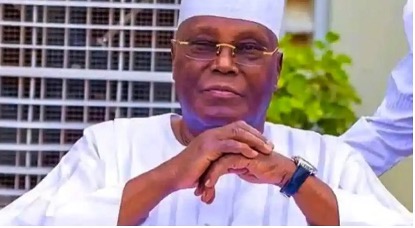
Timipre Marlin Sylva (born 7 July 1964) is a prominent Nigerian politician from Bayelsa State.
He has held several key political positions and remains an influential voice in Nigeria’s political and energy sectors.
Sylva served as the Governor of Bayelsa State in two non-consecutive terms — from 2007 to 2008, and again from 2008 to 2012. Later, he became the Minister of State for Petroleum Resources under President Muhammadu Buhari, serving from August 2019 to March 2023.
A member of the ruling All Progressives Congress (APC), Sylva has long been viewed as a political heavyweight in the Niger Delta region. His deep ties to the oil and gas industry, combined with his political background, give him both regional influence and national visibility. Over the years, he has built a reputation as a skilled political operator and a key player within Nigeria’s energy policy landscape.
2. What Are the Allegations?
In late October 2025, reports surfaced that 16 Nigerian military officers had been detained over an alleged coup plot. Shortly after, rumours began to circulate suggesting that Timipre Sylva might have been linked to the conspiracy.
The allegations included claims that Sylva was involved in planning or logistical coordination of a coup attempt against the administration of President Bola Ahmed Tinubu. Some media outlets, including The Capital NG, reported unverified sources implying Sylva’s name had been mentioned in connection with the ongoing investigation.
Adding to the controversy, Vanguard News reported that Sylva’s Abuja residence had been raided by operatives believed to be from the Defence Headquarters (DHQ). Witnesses alleged property damage during the operation, though no official statement was issued at the time.
Political observers speculated that Sylva’s ambitions for the 2027 elections may have motivated the circulation of such rumours, potentially as a way to tarnish his image within the APC. However, the origins of the claims remain murky. Despite the lack of concrete evidence, the combination of a reported raid and detained officers gave the story significant traction on social media and local news outlets.
3. Sylva’s Denial and Official Statements
In response to the spreading rumours, Timipre Sylva, through his Special Assistant on Media and Public Affairs, Chief Julius Bokoru, categorically denied any involvement in a coup plot.
According to Bokoru, the allegations are “baseless, false, and politically motivated.” He stressed that Sylva has always been a committed democrat and a loyal supporter of the APC and the Tinubu administration.
Bokoru confirmed that Sylva’s residence was indeed raided, but clarified that the politician and his wife were out of the country at the time. He added that no reason or warrant was provided for the raid, which he described as “deeply troubling and unnecessary.”
Furthermore, the aide suggested that political opponents, particularly those with ambitions tied to the 2027 elections, might be behind the smear campaign.
Independent Nigerian media outlets later echoed the denial, with several describing the accusations as a deliberate attempt to tarnish Sylva’s reputation and destabilise the political atmosphere in Bayelsa ahead of upcoming contests.
In summary, Sylva’s camp maintains that he has no connection — direct or indirect — to any coup plot, and that the allegations are part of a larger political strategy to discredit him.
4. Context and Significance of the Allegations
The allegations against Sylva carry deep significance in Nigeria’s political environment. Understanding why the story matters requires examining several overlapping dimensions.
A. Military–Political Interface
Nigeria’s political history is marked by a series of military coups that have shaped its governance structure. Although the country has enjoyed two decades of uninterrupted democracy since 1999, the relationship between the military and civilian government remains delicate.
Any suggestion of a coup — even unproven — raises alarm about the stability of Nigeria’s democratic institutions. The detention of 16 military officers underscores how seriously the government treats any such threat.
B. Political Timing
These rumours surface at a sensitive time. As the 2027 general elections approach, power struggles within major parties — especially the APC — are intensifying.
Sylva, as a former governor and ex-minister, remains a potential powerbroker in Bayelsa and across the Niger Delta. Smear campaigns or accusations can easily shift internal party dynamics, influence candidate selection, and shape alliances.
C. Reputation and Industry Leverage
Sylva’s long-standing role in Nigeria’s petroleum industry amplifies the stakes. As the former Minister of State for Petroleum, he retains strong connections in energy circles, both domestically and internationally.
Being associated with a coup plot could erode his credibility, not only politically but also within the energy and investment community — sectors critical to Nigeria’s economy.
D. Governance and Credibility
For President Tinubu and the APC, maintaining unity is essential.
Persistent rumours of internal dissent or coup plots can weaken public confidence, give opposition parties political ammunition, and project an image of instability.
A high-profile figure like Sylva being linked — even falsely — to a plot threatens the government’s image of cohesion and control.
5. What We Still Don’t Know
Despite the widespread coverage, several critical questions remain unanswered:
- Why was Sylva’s Abuja residence raided?
The Defence Headquarters has not released an official statement explaining the reason for the search. Sylva’s team says no warrant or explanation was provided. - What is the status of the detained officers?
While 16 names have reportedly been identified, no public evidence linking them to Sylva or other politicians has surfaced. - Will there be a transparent investigation?
Nigerians are calling for clarity — whether through a judicial probe or a parliamentary inquiry — to separate fact from speculation. - Are these claims purely political, or is there some intelligence basis?
Without official findings, the truth remains uncertain, leaving room for speculation and misinformation.
6. Possible Implications and What to Watch
For Sylva
If Sylva remains exonerated, this could enhance his political resilience, casting him as a victim of political targeting.
However, if credible evidence emerges later, his career and reputation could suffer irreparable damage, particularly as 2027 draws closer.
For Nigerian Politics
This episode highlights Nigeria’s fragile civil-military balance and the risks of political rivalries spilling into national security matters.
It could also intensify calls for greater accountability and transparency from security agencies regarding raids and arrests.
For Governance and Public Trust
If senior politicians continue to be publicly tied to coup rumours without evidence, public confidence in democratic institutions may weaken.
Concerns about political misuse of security forces could also rise, fueling debates about governance, justice, and rule of law.
7. Summary
Timipre Sylva, a seasoned politician and former Petroleum Minister, finds himself at the centre of a storm over rumours of a coup plot that led to the detention of 16 Nigerian military officers.
He has categorically denied any role in the alleged conspiracy, calling the claims politically motivated and unsubstantiated. While his home was raided, no charges have been filed, and the motive behind the operation remains unclear.
This controversy extends beyond one man’s reputation — it touches on Nigeria’s democratic stability, civil-military relations, and public trust in institutions.
As investigations unfold, the outcome will determine not just Sylva’s future, but also how Nigerians perceive the resilience and transparency of their political system.