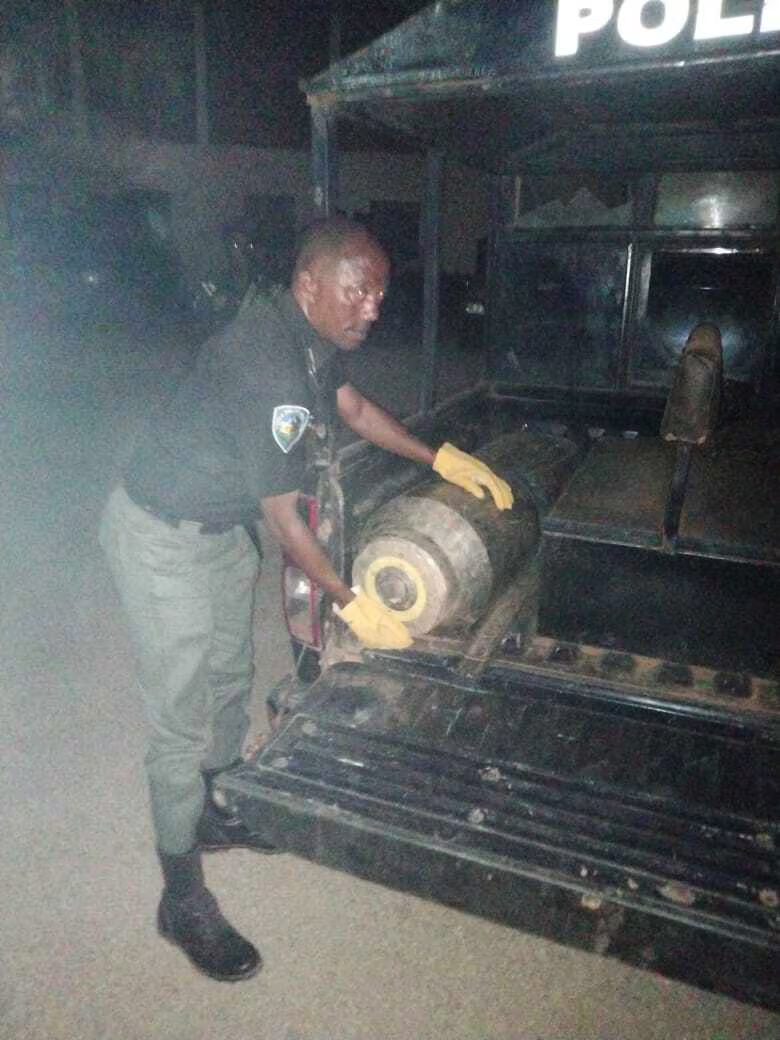
Evidence contradicts President Donald Trump’s characterization of a recent military operation. Following the December 25 U.S. Nigeria strike, at least four Tomahawk missiles failed to explode. This development undercuts Trump’s claim of “numerous perfect strikes.” Nigerian officials, imagery, and witness accounts confirm the malfunction. Unexploded warheads landed in an onion field, residential buildings, and agricultural areas. Consequently, the incident raises serious questions about the operation’s planning and effectiveness. The failed missiles represent a 25% failure rate for the high-cost munitions.
The Nigeria strike involved 16 Tomahawk missiles fired from a U.S. Navy ship. Their target was militant enclaves in northwestern Nigeria’s Bauni forest. President Trump framed the action as a blow against “ISIS Terrorist Scum.” However, analysts and U.S. officials cast doubt on the target’s significance. They suggest the strike likely hit a minor militant group called Lakurawa, not a major Islamic State cell. Furthermore, the high number of dud missiles suggests significant operational problems. This Nigeria strike highlights the limits of U.S. intelligence and capabilities in West Africa.
Locations and Impact of Failed Munitions
Residents and police documented the impact sites. One unexploded warhead landed in an onion field in Jabo village. Another struck residential buildings in Offa, causing significant structural damage. A third crashed in an agricultural field outside Offa. Nigerian police recovered a fourth in a Zugurma forest. Imagery and forensic analysis confirm the debris as Tomahawk warheads. The missile that hit Offa tore through an apartment building and hotel courtyard. Residents described a terrifying “ball of fire” and being trapped in rubble.
The failure to detonate poses ongoing risks to civilians. Unexploded ordnance remains highly hazardous. Nigerian authorities warned citizens not to touch the debris. Defense Ministry spokesman Michael Onoja stated special units were deployed for recovery. The presence of live warheads in populated areas underscores a major safety failure. This aspect of the Nigeria strike contradicts assurances of minimized civilian risk. Experts note that such failures can cause casualties long after the initial attack.
Doubts Over Intelligence and Target Selection
U.S. officials revealed Nigeria provided the targeting intelligence. One official admitted, “We have nothing in the area,” referring to U.S. intelligence assets. This reliance on partner intelligence is a critical vulnerability. Analysts question whether the targeted fighters justified the $30+ million in expended missiles. The group, Lakurawa, has a disputed affiliation. Some researchers link it to al-Qaeda, not ISIS. A former U.S. official questioned if the militants were “worth the price of one Tomahawk.”
The stated objective was unclear. Nigerian government statements referenced “foreign ISIS elements.” However, the location in the northwest is far from the Islamic State’s primary zone in the northeast. This discrepancy suggests either poor intelligence or a deliberate overstatement by authorities. An official stated AFRICOM overstated its confidence in the militants’ identity. The operation, according to one source, “was likely not very effective and did not remove any camps or capabilities.” This admission severely undermines the Nigeria strike’s proclaimed success.
Possible Reasons for Missile Failures
Experts offered several explanations for the dud missiles. Mechanical failure is one possibility for the weapon that hit buildings. However, three others landed in open areas, suggesting intentional diversion. Retired Navy officer Arch Macy explained commanders can crash missiles if targets change. Given the missiles’ hour-long flight time, militants may have moved. Alternatively, the intelligence may have degraded by launch time. Without a suitable secondary target, commanders might have chosen safe crash sites.
The high failure rate is notable. Tomahawks historically boast a 90% success rate. A 25% failure rate in this Nigeria strike is therefore anomalous. Each missile costs approximately $2 million, making the failure exceptionally costly. Analyst Tom Karako criticized “wasting Tomahawks on terrorists with no air defenses.” The incident also raises concerns about dwindling stockpiles after recent strikes in Yemen and Iran. This waste of resources highlights strategic questions about the operation’s overall value.
Aftermath and Continued Militant Threat
The strike’s aftermath includes both human and strategic costs. In Offa, displaced residents like Musa Soliu have lost everything. Meanwhile, the militant group Lakurawa reportedly retaliated. According to a researcher, they killed at least 21 civilians in Kebbi state on December 31. This retaliation indicates the Nigeria strike failed to degrade the group’s operational capacity. It may have even inflamed the security situation, leading to more violence against civilians.
The long-term implications are significant. The operation exposed gaps in U.S. intelligence and partnership vetting. It also demonstrated the risk of high-cost, low-precision strikes in complex environments. For future actions to be effective, they require better intelligence and sustainable local partnerships. As analyst Malik Samuel noted, strikes must drive groups out entirely to prevent violent reprisals. Otherwise, such interventions risk exacerbating the very instability they aim to curb.