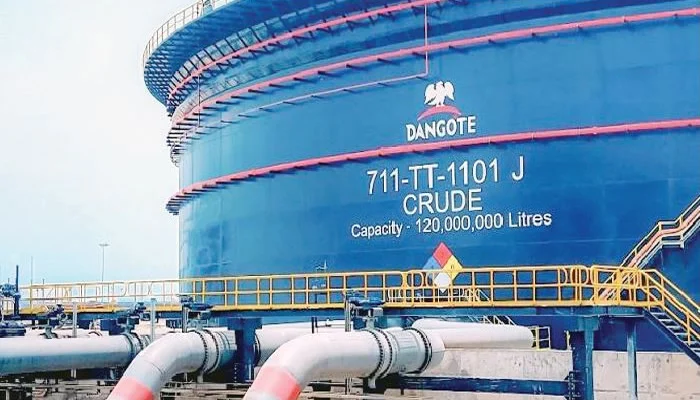
The latest Dangote refinery petrol price adjustment to N1,200 per litre signals a strategic shift in Nigeria’s downstream fuel market. Specifically, Anthony Chiejina, spokesperson for the Dangote Group, confirmed this downward review amid heightened global oil market uncertainty. Consequently, this development is expected to reshape fuel supply costs across distribution channels nationwide.
Furthermore, the coastal price has been pegged at N1,153 per litre, which directly affects marine deliveries to coastal depots. Moreover, marketers sourcing locally can now recalibrate their landing costs, potentially reducing reliance on imported fuel. Therefore, the Dangote refinery petrol price reduction creates immediate ripple effects throughout the supply chain. In particular, depots and retail outlets may see margin adjustments that benefit end consumers. Additionally, this pricing structure supports more predictable budgeting for transportation businesses.
Indeed, this price adjustment follows several increases since the US-Iran conflict began on February 28. Previously, pump prices averaged N1,300 after rising from N840 per litre. Thus, the latest reduction from N1,275 to N1,200 represents a meaningful correction. Consequently, consumers may experience marginal relief at the pump, though final retail prices depend on additional distribution margins. Hence, monitoring the Dangote refinery petrol price trend offers insights into broader market dynamics. Notably, global geopolitical tensions continue to influence pricing templates, making domestic adjustments particularly significant.
Additionally, the global oil market remains volatile due to geopolitical tensions in the Middle East. Specifically, these external factors influence pricing templates at refineries worldwide. Therefore, Dangote’s proactive adjustment demonstrates responsive market management. Moreover, maintaining competitive pricing supports the refinery’s strategic positioning within Nigeria’s energy landscape. In parallel, this move aligns with efforts to stabilize domestic fuel availability. Similarly, other downstream players may follow suit to maintain market share.
Notably, the Dangote Petroleum Refinery operates under a naira-for-crude agreement with the Nigerian National Petroleum Company Limited. However, recent reports indicate crude supply shortfalls affecting operational capacity. For instance, the facility requires approximately 19.77 million barrels monthly but received significantly lower volumes between October 2025 and mid-March 2026. Consequently, these constraints impact production consistency and pricing flexibility. Therefore, addressing crude supply reliability remains critical for sustaining the Dangote refinery petrol price stability. Furthermore, consistent feedstock delivery enables more accurate cost forecasting.
Furthermore, Managing Director David Bird highlighted that the refinery receives only five crude cargoes instead of the agreed thirteen under the naira-for-crude deal. Specifically, this gap limits full-capacity operations and affects output projections. Thus, resolving supply chain bottlenecks becomes essential for long-term market impact. Moreover, consistent crude delivery would enable more predictable pricing strategies. Hence, stakeholders closely watch negotiations between Dangote and NNPC for resolution. In addition, transparent communication helps manage market expectations.
In addition, the Petroleum Industry Act prohibits crude exports before meeting local demand. Therefore, ensuring domestic refineries receive adequate feedstock supports national energy security. Consequently, policy enforcement plays a vital role in balancing export revenues with local processing needs. Specifically, the Dangote refinery petrol price benefits when domestic crude allocation aligns with refinery requirements. Moreover, this alignment strengthens Nigeria’s downstream sector resilience. Similarly, other African nations observe these developments for regional policy insights.
Looking ahead, the reduced Dangote refinery petrol price may encourage greater local sourcing among marketers. Indeed, lower landing costs could diminish the economic advantage of importing finished products. Therefore, domestic refining capacity gains competitive traction. Additionally, coastal pricing at N1,153 per litre offers alternative supply routes for southern distributors. Thus, logistical flexibility improves across regional markets. Furthermore, stable pricing supports investment planning across the value chain.
Ultimately, this pricing adjustment reflects broader efforts to stabilize Nigeria’s fuel market. Specifically, affordable PMS supports economic activity and household budgets nationwide. Moreover, consistent supply reduces speculative pricing and hoarding behaviors. Consequently, consumers benefit from greater predictability in transportation costs. Hence, the Dangote refinery petrol price serves as a benchmark for market expectations. In parallel, government agencies monitor outcomes to refine regulatory frameworks.
Additionally, the refinery’s pricing strategy influences foreign exchange dynamics. Specifically, reducing reliance on imported fuel conserves scarce foreign reserves. Therefore, domestic production supports macroeconomic stability. Moreover, local refining creates jobs and stimulates ancillary industries. Thus, the Dangote refinery petrol price adjustment carries implications beyond the energy sector. Indeed, integrated economic benefits emerge when domestic capacity expands.
In conclusion, the Dangote Petroleum Refinery’s price reduction marks a significant development for Nigeria’s energy sector. By lowering the Dangote refinery petrol price to N1,200 per litre, the initiative supports downstream affordability amid global volatility. Furthermore, addressing crude supply challenges will determine long-term sustainability. Therefore, coordinated efforts between government, industry, and regulators remain essential. Ultimately, stable fuel pricing contributes to economic growth and energy access for all Nigerians. Hence, this adjustment represents both a market correction and a strategic commitment to national development.