The REA solar mini grid initiative has gained momentum after fresh funding was released to expand electricity access in underserved Nigerian communities. As a result, the latest investment signals growing confidence in renewable energy solutions across the country.
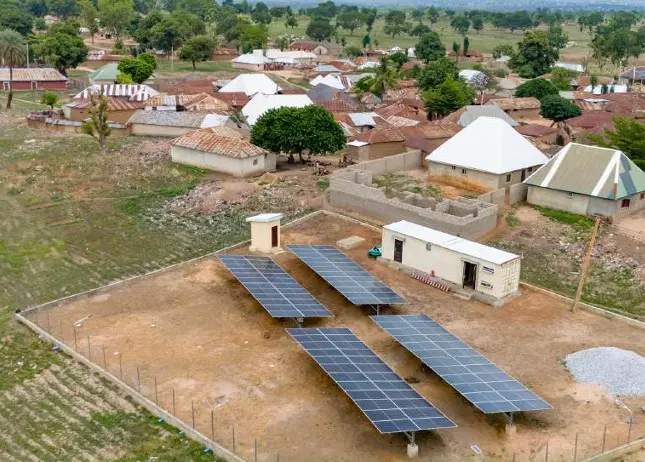
The Rural Electrification Agency disbursed about ₦9 billion to support solar mini-grid projects in Taraba, Kogi, Kwara, and Niger states. According to the agency, this funding forms part of its Distributed Access through Renewable Energy Scale-up Programme. Therefore, the REA solar mini grid effort continues to scale through structured financing and partnerships.
In addition, the agency confirmed that the programme received a major boost from a ₦100 billion financing agreement with Lotus Bank. Consequently, developers now have stronger financial backing to deliver projects faster and more efficiently.
The REA solar mini grid projects target communities with limited or no access to electricity. By deploying mini-grids across multiple states, the agency aims to improve power reliability and reduce dependence on the national grid. As a result, households and businesses in these areas could experience more stable energy supply.
Abba Aliyu highlighted the importance of consistent funding in driving progress. He explained that the steady flow of capital shows increasing investor confidence in Nigeria’s renewable energy sector. Moreover, he emphasized that the initiative represents a sustained pattern of development rather than a one-time intervention.
He also noted that the funding will support both developers and communities. For developers, it provides access to equipment and financing needed to complete projects. For communities, it shortens the timeline for accessing reliable electricity. Therefore, the REA solar mini grid programme delivers benefits across the entire value chain.
A breakdown of the funding reveals how the agency allocated resources. Havenhill received ₦7.95 billion to support four mini-grid projects across Taraba, Kogi, and Kwara states. Meanwhile, Faraday & Otstred Limited secured ₦1.056 billion for three projects in Niger State. As a result, the REA solar mini grid rollout now covers multiple regions with targeted investments.
The agency also referenced earlier funding approvals. It had previously allocated ₦7.4 billion to Ventura Logistics Services and ₦3.2 billion to Zanoplus. These ongoing investments reinforce the government’s commitment to expanding renewable energy infrastructure. Consequently, the sector continues to attract both public and private capital.
At the national level, the funding aligns with broader power sector reforms. Bola Tinubu recently approved a ₦3.3 trillion plan to clear legacy debts in the electricity sector. This programme aims to stabilise the industry and improve overall efficiency. So far, about 15 power plants have signed agreements worth ₦2.3 trillion.
In addition, the Federal Government has already raised ₦501 billion to support these settlements and disbursed ₦223 billion. These efforts, combined with the REA solar mini grid initiative, reflect a coordinated strategy to strengthen Nigeria’s energy sector.
Importantly, the focus on mini-grids supports decentralised energy development. Instead of relying solely on the national grid, Nigeria is investing in localized power solutions. Therefore, rural communities can gain access to electricity without waiting for large-scale infrastructure expansion.
Looking ahead, the REA plans to invest ₦100 billion in 2026 to develop hybrid mini-grid systems for government institutions across the country. This strategy will further expand the reach of the REA solar mini grid programme while improving energy reliability in public facilities.
Ultimately, the latest funding highlights a shift in Nigeria’s approach to power generation. By combining renewable energy, local financing, and targeted investments, the country is building a more resilient and inclusive energy system.