The future of Cross River Manufacturing depends heavily on tax reforms and improved infrastructure, according to industry leaders who warn that current conditions are making business operations increasingly difficult. Manufacturers say excessive taxes and poor road networks continue to raise production costs and discourage industrial expansion in the state.
The Manufacturers Association of Nigeria (MAN) recently raised these concerns during a visit to Calabar, the capital of Cross River State. During the visit, association leaders met government officials and toured key industrial facilities to evaluate the challenges affecting Cross River Manufacturing.
MAN President Francis Meshioye explained that the association travelled to Calabar to engage directly with the state government and explore ways to strengthen industrial collaboration.
According to him, discussions focused on identifying policies that could support manufacturing growth while improving the operating environment for businesses.
Meshioye emphasized that the development of Cross River Manufacturing requires stronger cooperation between the government and private sector. He said manufacturers want policies that promote industrial investment rather than increase operational pressure.
During the visit, association leaders toured facilities including Boa Yao Huan Jian Iron and Steel Group and Niger Mills Company Limited. The tour allowed MAN officials to observe production operations while discussing challenges directly with company managers.
Industry representatives used the opportunity to highlight several structural issues affecting Cross River Manufacturing.
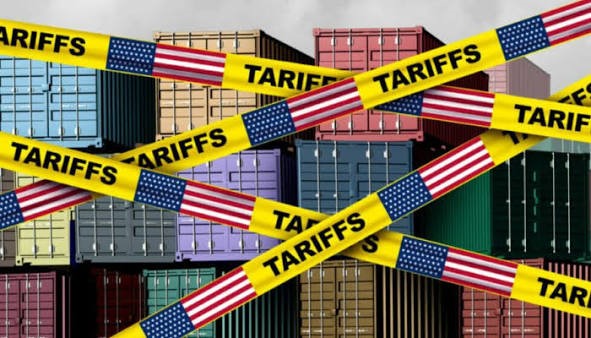
One of the most pressing concerns remains multiple taxation. Meshioye explained that manufacturers often face numerous levies from federal, state, and local government authorities.
These taxes appear in different forms, including licensing fees, operational charges, inspection fees, and local government levies.
According to the association, some companies must deal with as many as forty separate taxes and charges. This complex system significantly raises the cost of doing business.
As a result, manufacturers say the tax structure creates financial uncertainty and discourages investment.
Meshioye argued that streamlining the tax system would provide greater clarity for businesses operating in Cross River Manufacturing.
He explained that companies should clearly understand their financial obligations without facing repeated collections from multiple authorities.
Such reforms would reduce administrative burdens while allowing businesses to focus on production and growth.
Meshioye also expressed cautious optimism about recent federal tax reforms introduced by the Nigerian government under President Bola Tinubu.
If implemented effectively across all levels of government, these reforms could simplify taxation and reduce pressure on manufacturers.
However, he stressed that successful reform requires coordination among federal, state, and local authorities.
Without consistent implementation, the reforms may fail to resolve the problems affecting Cross River Manufacturing.
Infrastructure challenges also featured prominently in discussions between MAN leaders and state officials.
Poor road conditions around industrial zones continue to disrupt logistics operations. Manufacturers say damaged roads slow the movement of raw materials to factories and finished goods to markets.
Consequently, transportation costs increase while delivery timelines become unpredictable.
Some companies operating in Cross River Manufacturing reported that trucks struggle to reach their facilities during heavy rainfall because access roads deteriorate quickly.
Manufacturers therefore urged the state government to prioritize road repairs around industrial corridors.
Improved infrastructure would strengthen supply chains and reduce operational delays.
Meshioye explained that reliable transportation networks are essential for the growth of manufacturing industries.
Without efficient road connections, companies face higher distribution costs that ultimately affect product pricing and competitiveness.
Despite these challenges, the MAN president acknowledged the positive role some companies play within their host communities.
During the facility tour, he observed several corporate social responsibility initiatives designed to support local development.
Some companies offer training programs, skills acquisition initiatives, and community support projects.
These programs aim to improve local livelihoods while building stronger relationships between industries and surrounding communities.
Meshioye praised these efforts and encouraged companies involved in Cross River Manufacturing to continue supporting their host communities.
Strong community partnerships often create a more stable environment for industrial operations.
Segun Ajayi-Kadir, Director-General of MAN, also spoke about the purpose of the association’s visit.
He explained that the engagement formed part of a broader effort to strengthen collaboration with state governments.
The association regularly interacts with its regional branches to assess challenges facing manufacturers across Nigeria.
During the Calabar visit, MAN leaders consulted members from the Cross River and Akwa Ibom branches.
These consultations allowed the association to gather feedback directly from companies involved in Cross River Manufacturing.
Ajayi-Kadir said such engagements help the association develop policy recommendations that address real industry challenges.
He also reaffirmed MAN’s commitment to working with governments at all levels to improve Nigeria’s business environment.
According to him, sustainable economic growth depends heavily on a strong manufacturing sector.
Manufacturing industries generate employment, stimulate local supply chains, and support national economic development.
Therefore, policies that strengthen Cross River Manufacturing could play an important role in regional economic expansion.
Industry leaders believe that addressing taxation and infrastructure issues will significantly improve the state’s industrial competitiveness.
If reforms succeed, Cross River could attract more manufacturing investments and create new opportunities for businesses and workers alike.