Tanzania’s government plans a ten percent spending rise in the next fiscal year, increasing overall expenditure to 61.93 trillion shillings. This figure equals approximately 24.29 billion US dollars. Finance Minister Khamis Mussa Omar announced the budget guidelines amidst significant financial pressure. The East African nation faces a funding crunch due to the withdrawal of budget support from key partners like the United States and the European Union. Consequently, the planned spending rise will require increased domestic borrowing and careful fiscal management.
President Samia Suluhu Hassan warned in November that Tanzania’s tarnished global reputation could hinder funding from international institutions. The disputed 2025 election, marred by clashes and the exclusion of main challengers, has impacted the country’s standing. Despite these challenges, the economy is forecast to grow six point three percent in 2026, up from five point nine percent last year. Medium-term growth is projected to average six point nine percent. This growth outlook provides some fiscal space, but the government must navigate reduced external support to finance its development agenda.
Budget Composition and Borrowing Plans
The planned spending rise to 61.93 trillion shillings will be funded through a combination of revenue and borrowing. Minister Omar stated the government expects to borrow 15.24 trillion shillings in the coming fiscal year. This is a slight increase from the 15 trillion shillings borrowed in the current year. The reliance on borrowing underscores the gap created by the loss of direct budget support from traditional donors. Tanzania will likely tap domestic and international debt markets to bridge this deficit.
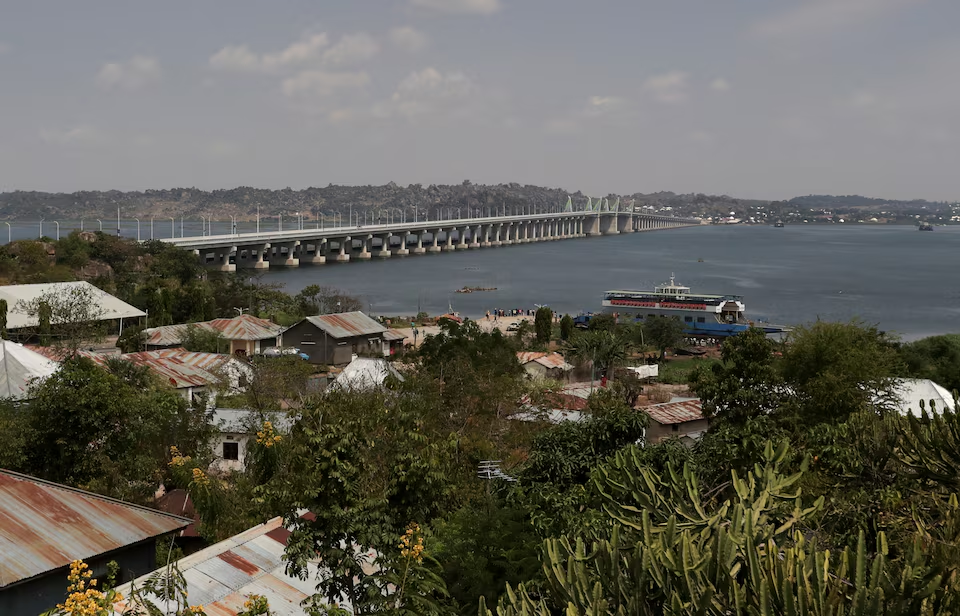
The budget guidelines document, seen by Reuters, did not provide a detailed sectoral breakdown. However, past budgets have prioritized infrastructure, energy, and social services. Major projects like the John Pombe Magufuli Bridge across Lake Victoria represent the kind of capital-intensive development that requires sustained funding. The spending rise suggests the government intends to continue its infrastructure push despite the more constrained financial environment, betting that these investments will fuel the projected economic growth.
Context of Withdrawn Donor Support
The withdrawal of budget support from the US and EU is a major headwind. This support traditionally provided direct, non-earmarked funding to the treasury, offering flexibility. Its loss forces Tanzania to seek more expensive or less flexible financing options. President Hassan directly linked this challenge to the country’s global reputation, damaged by democratic backsliding and election controversies. Rebuilding trust with Western donors will be a slow process, requiring demonstrable political and governance reforms.
In the interim, Tanzania may seek alternative financing from non-traditional partners, such as China or Middle Eastern funds, and multilateral institutions like the African Development Bank. However, loans from these sources often come with stricter conditions or higher interest rates. The government’s ability to manage this transition without derailing its development plans or accumulating unsustainable debt will be a key test of its economic stewardship. The modest planned spending rise reflects an attempt to balance these competing pressures.
Economic Growth Outlook and Fiscal Sustainability
Tanzania’s growth forecast provides a silver lining. The projected acceleration to six point three percent in 2026, and an average of six point nine percent over the medium term, suggests a resilient economy. This growth should boost tax revenues, helping to offset some lost donor funds. Sectors like tourism, agriculture, and natural gas are potential growth drivers. However, growth projections are contingent on political stability and continued public investment, creating a circular dependency with the budget.
Fiscal sustainability remains a concern. Increased borrowing to fund the spending rise will raise the national debt burden. Tanzania must ensure borrowed funds are invested in productive, growth-enhancing projects to generate future returns that can service the debt. Poor project selection or implementation would risk a debt crisis. The government’s commitment to fiscal discipline will be closely watched by credit rating agencies and international investors, who will determine the cost of future borrowing.
Political Landscape and Policy Direction
President Samia Suluhu Hassan’s administration operates in a complex political environment. Her landslide election victory was disputed, and maintaining domestic legitimacy is crucial for policy stability. The budget is a key tool for delivering development promises and maintaining public support. The planned spending rise signals a commitment to an activist government role in the economy, continuing the legacy of her predecessor, the late John Magufuli, albeit potentially with a different tone regarding external engagement.
The government’s challenge is to finance its agenda while navigating a more skeptical international community. This may involve a delicate balancing act: pursuing reforms to satisfy donors while maintaining a nationalist economic policy that resonates domestically. The upcoming budget speech will provide more detail on how the administration plans to square this circle. The success of its fiscal strategy will have significant implications for Tanzania’s development trajectory and its position in the region.
Implications for Development and Regional Standing
Tanzania is a major East African economy, and its fiscal health influences regional stability and integration. A sustained spending rise, if effectively implemented, could improve infrastructure, reduce poverty, and strengthen its economic position. Conversely, fiscal mismanagement could lead to instability that spills over borders. Neighbors and regional bodies like the East African Community will monitor Tanzania’s ability to maintain macroeconomic stability amid its funding challenges.
The country’s experience also serves as a case study for other African nations facing reduced Western aid. Tanzania’s shift toward greater reliance on domestic resource mobilization and alternative international partnerships may become a more common model. The outcome of its strategy—whether it sustains growth without compromising debt sustainability—will be instructive for policymakers across the continent navigating a changing global aid architecture.