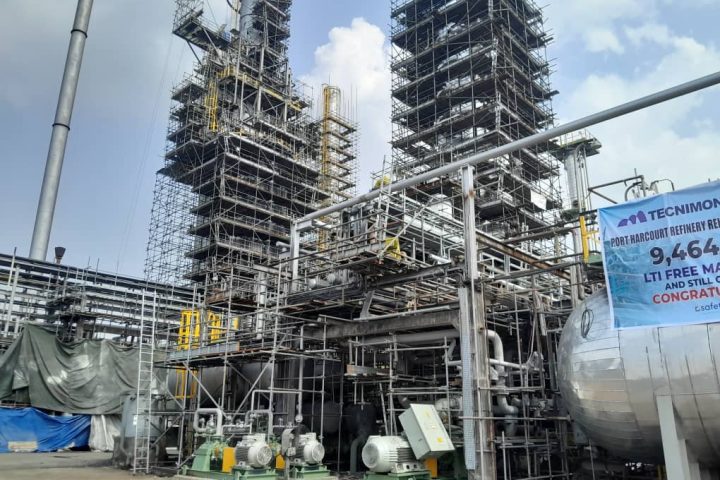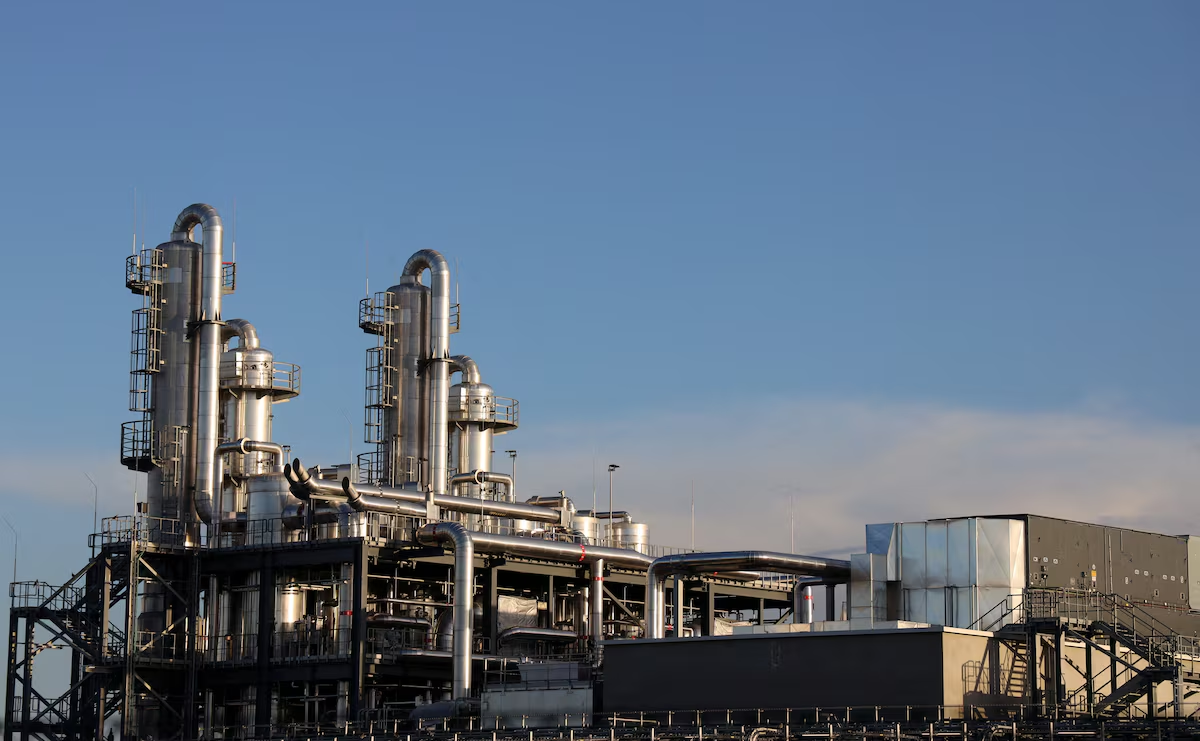
Lagos, Nigeria — October 2025:
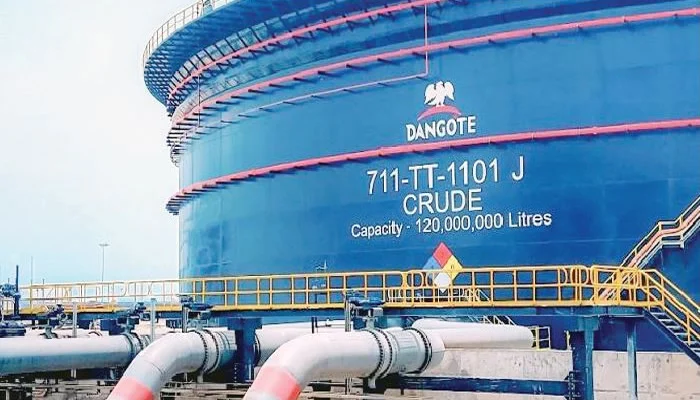
Africa’s richest man, Aliko Dangote, has unveiled plans to expand the capacity of the Dangote Refinery in Lagos from 650,000 barrels per day (bpd) to around 1.4 million bpd. The move would make it one of the largest oil refineries in the world, potentially rivaling India’s Reliance Industries’ Jamnagar complex.
Scope of the Expansion
The announcement, made in late October, marks a bold new phase for Nigeria’s industrial landscape. According to Dangote, the refinery’s infrastructure — including the deep seaport, storage tanks, and single-point mooring systems — already provides a strong foundation for this major upgrade. Consequently, the expansion is expected to take around three years to complete.
To finance the growth, Dangote Industries plans to sell between 5% and 10% of its equity on the Nigerian Exchange Limited (NGX) within the next year. The refinery will also seek external financing, including a USD $5 billion loan from the African Export–Import Bank (Afreximbank). Additionally, internal cash flows and partnerships with strategic global investors are expected to play a significant role in funding the downstream petrochemical component of the project.
Dangote emphasized that the expansion would consolidate Nigeria’s position as an energy hub in Africa, stating that “Nigeria should not only produce crude oil but also process it locally for domestic and export markets.”
Why the Expansion Matters
This development holds enormous implications for Nigeria and beyond. For decades, the country — despite being one of Africa’s top oil producers — has relied heavily on imported refined products, draining foreign exchange reserves. The launch of the Dangote Refinery in 2024 began reversing this trend.
Now, with expanded capacity, Nigeria could fully meet domestic demand while also exporting refined fuels and petrochemicals, generating foreign-exchange income and reducing import dependence. The move is expected to strengthen the naira, curb inflationary pressure, and create thousands of jobs.
Moreover, the planned stake sale on the NGX is being seen as a milestone for Nigeria’s capital markets. It will allow local and institutional investors to participate in a “national asset,” expanding ownership beyond Dangote’s core group. Analysts say this aligns with Nigeria’s push to deepen its financial markets and attract long-term domestic investment.
Financial and Operational Details
The refinery’s existing 650,000 bpd output has already made it Africa’s largest, though it has occasionally faced feedstock supply constraints from the Nigerian National Petroleum Company Limited (NNPCL). The expansion aims to secure more stable supply chains through new crude sourcing agreements and increased storage capacity.
The target output of 1.4 million bpd would nearly double production capacity, allowing the facility to export diesel, aviation fuel, and petrochemical products across Africa and Europe. Dangote projects that, once fully operational, the refinery and associated petrochemical complex could generate $55 billion in annual revenue.
To achieve this, the refinery plans to increase polypropylene production from one to 1.5 million tonnes per year and boost base oil and linear alkylbenzene output for industrial and detergent manufacturing.
Strategic Context
The expansion fits within Nigeria’s wider economic agenda under President Bola Tinubu’s administration, which has prioritized private-sector investment and diversification. These reforms — including foreign-exchange liberalisation and subsidy removal — have made the environment more conducive to industrial growth.
Across Africa, underdeveloped refining capacity has long hindered economic self-sufficiency. By transforming crude locally, Nigeria could lead a continental shift toward value addition rather than raw-material export.
This move also mirrors Dangote’s broader corporate strategy. Just as Dangote Cement and Dangote Sugar became public companies to attract investors, the refinery’s planned NGX listing follows a familiar path — one that combines domestic participation with institutional accountability.
Challenges and Risks
However, this ambitious expansion faces several key challenges.
First, feedstock supply remains a recurring issue. Nigeria’s upstream sector has faced production shortfalls and theft-related disruptions. Dangote’s refinery has, at times, imported crude from outside the country to maintain operations. A consistent domestic supply deal with NNPCL will therefore be crucial.
Second, financing risks persist. Raising billions in equity and debt will depend on global investor confidence, prevailing interest rates, and the stability of Nigeria’s naira.
Additionally, execution challenges could slow progress. Doubling refinery output requires extensive engineering, procurement, and commissioning. Even though core infrastructure exists, expansion on this scale involves complex logistics, skilled labour, and environmental safeguards.
Market conditions also play a role. Global refining margins fluctuate, and Nigeria’s regulated fuel-pricing system could affect profitability. Furthermore, increased competition from other regional refineries — particularly those in Angola and Egypt — could influence export pricing.
Environmental and social concerns are another dimension. The refinery complex has already drawn scrutiny for local community displacement and pollution risks. Dangote Industries has pledged to enhance corporate social responsibility measures, but long-term monitoring will be critical.
Lastly, selling a minority stake means ownership dilution. While this promotes transparency, it also means Dangote Group will relinquish some control to public investors — a trade-off between growth and governance.
Broader Implications
If successful, the refinery expansion could reshape Nigeria’s economy. Reduced dependence on fuel imports would save billions in foreign exchange annually, while the creation of 65,000 direct and indirect jobs could stimulate local economies.
For Africa, the project represents a major step toward energy self-sufficiency. With refined products available regionally, West African countries may spend less on imports from Europe and the Middle East. It also opens opportunities for cross-border trade in fuels, chemicals, and industrial raw materials.
From an investor’s standpoint, the listing of a stake in the refinery on the NGX could deepen Nigeria’s capital markets and attract both local and global funds into industrial infrastructure — an area historically underrepresented on African stock exchanges.
What Lies Ahead
Over the next few years, analysts will closely monitor several milestones:
- The size and valuation of the stake sale on the NGX.
- The timeline and terms of the Afreximbank loan.
- The progress of construction and capacity upgrades.
- The stability of crude supply agreements.
- The performance of the refinery as it scales toward 1.4 million bpd.
- The social and environmental compliance outcomes for host communities.
If these indicators remain positive, the expansion could position Nigeria as a regional energy powerhouse and one of the world’s top refining nations.
Conclusion
The Dangote refinery expansion stands as one of the boldest industrial initiatives ever undertaken in Africa. By combining massive production targets, capital-market participation, and strategic partnerships, it reflects a growing confidence in Nigeria’s economic potential.
Yet, the path ahead will test execution, financing, and governance. If Dangote succeeds, the project could redefine how African nations leverage natural resources — moving from exporters of crude to producers of finished products that create wealth and jobs at home.