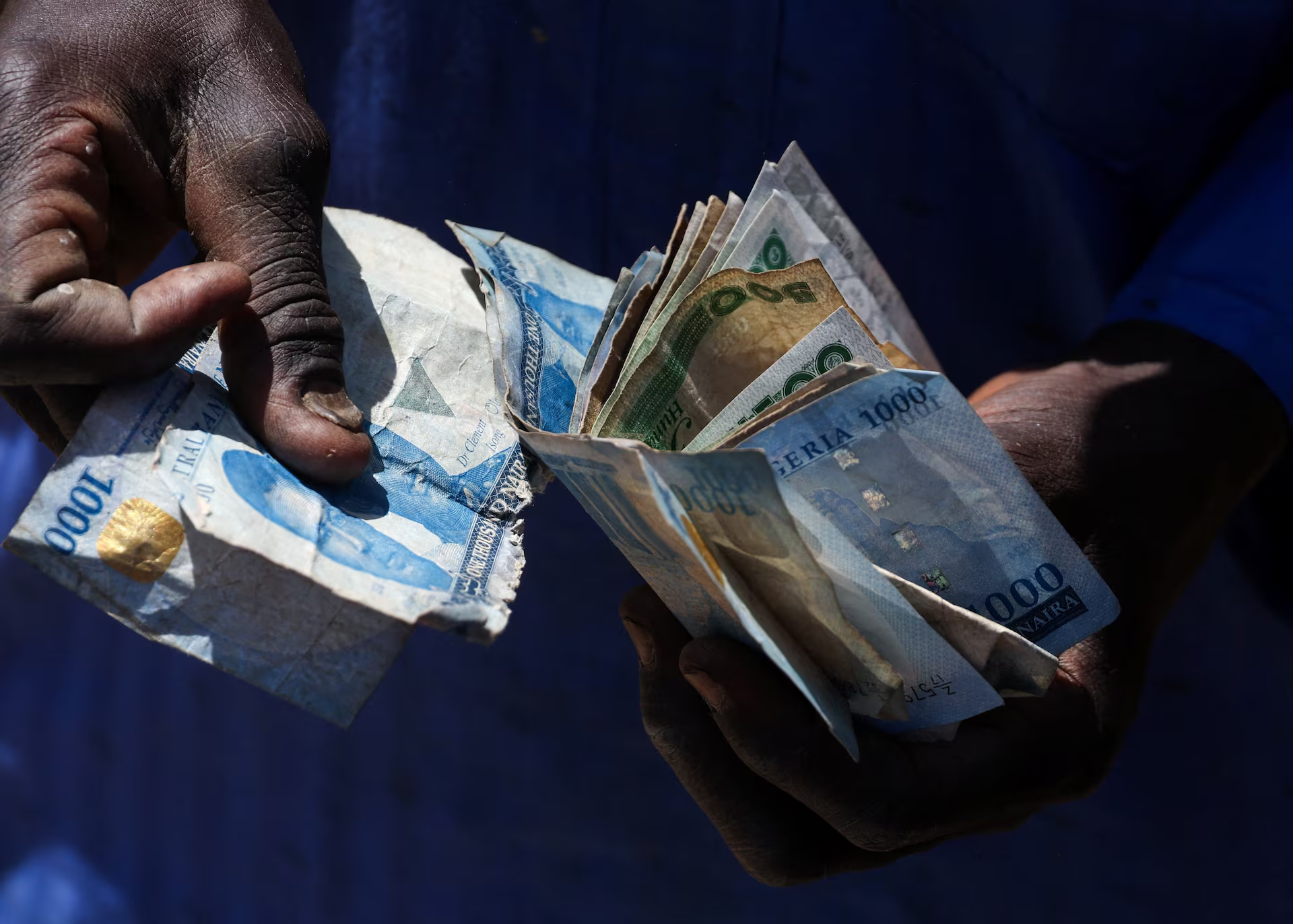
The naira strengthening trend has accelerated recently. Consequently, the currency reached 1,347.78/$ on Monday. This marks a two-year high in the official market. Furthermore, year-to-date appreciation stands at 6.9 percent. Thus, improved liquidity conditions support these gains.
Market Dynamics Behind naira strengthening
Specifically, the official foreign-exchange window shows better supply. Moreover, the Central Bank of Nigeria intervened actively. Therefore, the parallel market premium narrowed significantly. Initially, the gap stood at 5.7 percent. However, renewed FX measures compressed it to 3.2 percent. This narrowing suggests more liquidity in official channels. The naira strengthening thus reflects policy effectiveness.
Additionally, licensed Bureau de Change operators gained FX access last week. Specifically, they can purchase up to $150,000 weekly. Furthermore, KYC requirements ensure transaction transparency. Moreover, unused balances must be sold within 24 hours. This prevents hoarding and stabilizes retail supply. Cash transactions remain capped at 25 percent of total trades. Consequently, settlement occurs through licensed institutions only. These measures support sustained naira strengthening.
Portfolio Inflows and Exit Risks
Foreign portfolio investment continues attracting capital to Nigeria. Specifically, the carry trade remains compelling across emerging markets. Therefore, analysts estimate outstanding FPI positioning at 12−14billion.Moreover,many2025inflowsenterednearN1,500/. Consequently, currency gains could reach 22.4 percent if the naira strengthens to N1,200-1,250/$. This potential profit raises exit risks later in 2026. Thus, the naira strengthening trend may face reversal pressure.
Additionally, election-related uncertainties could amplify investor caution. Specifically, the general elections approach in the second half. Therefore, foreign investors might rebalance portfolios preemptively. Moreover, forward-market pricing suggests a weaker trajectory later. Six-month non-deliverable forwards indicate N1,449.96/bymid−2026.Consequently,thebase−caserangesitsatN1,350−1,450/ for the year. This outlook tempers expectations for sustained naira strengthening.
CBN Policy Signals and Liquidity Management
The Monetary Policy Committee meeting sends mixed signals currently. Specifically, inflation moderates while short-term rates converge near 22 percent. This sits about 500 basis points below the 27 percent MPR. However, the CBN shows low tolerance for excess liquidity. Therefore, the governor flagged liquidity overhang as a stability risk. Consequently, the apex bank net-issued N10.9 trillion via OMO this year. Moreover, the SDF rate remains attractive for bank deposits. Thus, these tools manage inflationary pressures proactively.
Additionally, election-related liquidity concerns grow for H2 2026. Specifically, over 75 percent of expected N44.2 trillion liquidity arrives in H1. Therefore, the CBN may hold policy rates constant initially. This signals caution about liquidity risks effectively. Moreover, adjusting the asymmetric corridor could align SDF rates with OMO yields. Consequently, banks remain engaged as key FPI counterparties. Analysts assign 60 percent probability to this scenario. Alternatively, a 50-100 basis points rate cut holds 40 percent likelihood. This policy flexibility supports measured naira strengthening.
Forward Outlook for Exchange Stability
Sustainable currency gains require balanced policy execution. Consequently, monetary authorities must monitor portfolio flow volatility closely. Furthermore, structural reforms should deepen FX market liquidity. Thus, speculative pressures diminish over time. Additionally, corporate FX demand routing to official windows helps stability. This trend reflects material market improvements notably. Therefore, the naira strengthening foundation strengthens gradually.
Business confidence also influences currency trajectories significantly. Specifically, transparent communication builds market trust effectively. Moreover, predictable interventions reduce panic-driven parallel activity. Thus, the premium compression may persist with discipline. Additionally, BDC supply capacity of ~$50 million monthly supports retail needs. Though below pre-pandemic levels, this meets current demand. Consequently, gradual normalization supports the naira strengthening path.
Ultimately, Nigeria’s exchange rate stability hinges on multiple factors. Therefore, coordinated fiscal and monetary policies remain essential. Furthermore, election preparedness affects investor sentiment positively. Thus, holistic governance strengthens currency fundamentals. The naira strengthening trend offers hope but demands vigilance. Continued reforms can lock in these hard-won gains. Sustainable prosperity follows sound economic stewardship consistently.
READ: Banque Pictet Opens First Africa Office in South Africa