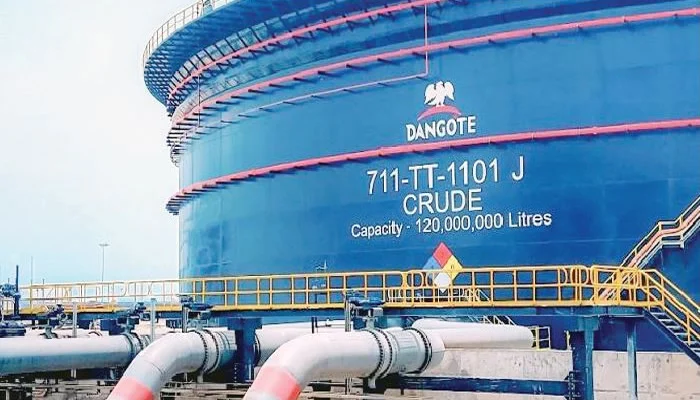
Dangote Refinery exports have officially begun. Specifically, Africa’s largest oil processing facility now ships petroleum products across regional markets. This milestone follows the plant’s achievement of full production capacity. Consequently, Nigeria now emerges as a hub for refined fuel distribution.
Billionaire Aliko Dangote owns the facility. Recently, it reached its nameplate capacity of 650,000 barrels per day. The refinery processes Nigerian crude into gasoline, diesel, and jet fuel. Moreover, company representatives confirmed this operational milestone last month. Years of construction and technical calibration preceded this achievement. Furthermore, independent energy analysts have verified the refinery’s output levels. Their findings reinforce confidence in long term commercial viability. For additional context, Reuters provides comprehensive coverage of Nigeria’s evolving energy sector.
Initial Dangote Refinery exports include approximately 456,000 tons of petroleum products. These shipments target markets from West to East Africa. Notably, they represent less than twenty percent of monthly production. Therefore, significant potential exists for expanded distribution. Early recipient countries include Ghana, Senegal, Ivory Coast, and Tanzania. This reflects a strategic focus on high demand regions. Additionally, logistics partnerships with established shipping firms enable efficient delivery. Meanwhile, competitive pricing structures remain intact. Market observers note geographic proximity reduces transportation expenses. As a result, this strengthens the commercial argument for sustained Dangote Refinery exports throughout African economies.
Economic implications extend beyond commercial metrics. For instance, reduced reliance on imported refined fuel could stabilize Nigerian domestic prices. It may also conserve valuable foreign exchange reserves. Similarly, increased local refining capacity may lower transportation costs continent wide. Consequently, it could enhance energy security for developing nations. The African Development Bank estimates regional refining investments could reduce Africa’s annual fuel import bill by billions. This would free capital for infrastructure projects and social programs. Their published reports offer valuable data on continental energy trade. Nigeria stands to gain substantial fiscal benefits. However, transparent management and reinvestment in public goods will maximize these gains.
Operational success requires navigating complex challenges. First, global oil price volatility presents ongoing considerations. Additionally, infrastructure limitations and varying regulatory frameworks add complexity. Maintenance schedules demand careful planning. Likewise, consistent crude supply remains essential. Competition from established international refiners requires strategic management. Nevertheless, company leadership emphasizes commitment to operational excellence. They pursue measured market penetration. Industry analysts suggest consistent performance over the next twelve to eighteen months will determine long term viability. Moreover, geopolitical developments and currency fluctuations add further layers. Evolving environmental standards require adaptive responses. Ultimately, sustainable success depends on agile strategies and robust risk mitigation.
The broader significance of Dangote Refinery exports transcends immediate commercial outcomes. Historically, Africa has exported crude oil. Simultaneously, it has imported refined petroleum products. This paradox limits economic value retention within the continent. Therefore, this facility represents a strategic step toward correcting that imbalance. If similar projects gain traction across African nations, the continent could transform. Africa might shift from net fuel importer to self sufficient energy producer. Such a shift would empower national economies. Furthermore, it would strengthen regional trade integration. The refinery’s petrochemical production capabilities enable value added manufacturing. This creates employment opportunities. Additionally, it fosters industrial diversification. For related insights, explore our analysis of emerging African manufacturing hubs.
Dangote Refinery exports continue to expand their geographic reach. Consequently, the facility stands as a symbol of African industrial ambition. It also demonstrates technical capability. Long term success depends on sustained operational discipline. Moreover, adaptive market strategies matter. Supportive policy environments enable growth. Nigeria and neighboring nations could unlock new pathways. Economic growth, job creation, and energy resilience await. Indeed, the journey from construction to active export represents a beginning. Continental energy transformation lies ahead. Therefore, public and private stakeholders must collaborate. Lasting prosperity requires shared commitment. With thoughtful stewardship, African led energy solutions could benefit communities across the continent.
This achievement highlights the importance of patient capital. Furthermore, long term vision drives infrastructure development. Large scale industrial projects often face skepticism. Extended construction phases test investor resolve. Yet completion can reshape regional economic dynamics. Specifically, Dangote Refinery exports demonstrate African owned enterprises can compete globally. Sound engineering enables success. Strategic planning matters. Committed leadership drives results. As other nations observe this model, increased investment in regional refining capacity could follow. Consequently, a virtuous cycle of industrial development may emerge. Energy independence could become attainable.
Looking ahead, optimization becomes the focus. Supply chains require refinement. Product portfolios may expand. Enduring customer relationships need cultivation across African markets. The Dangote Refinery exports strategy must remain flexible. Shifting demand patterns require adaptation. Similarly, emerging competitive pressures demand attention. Success will be measured in tonnage shipped. However, tangible economic benefits delivered to communities matter more. Continued dedication to quality ensures progress. Reliability builds trust. Responsible operations foster goodwill. Thus, this landmark facility can catalyze broader industrial advancement. Africa’s economic future grows brighter with each shipment. Indeed, Dangote Refinery exports represent more than commerce. They symbolize possibility.