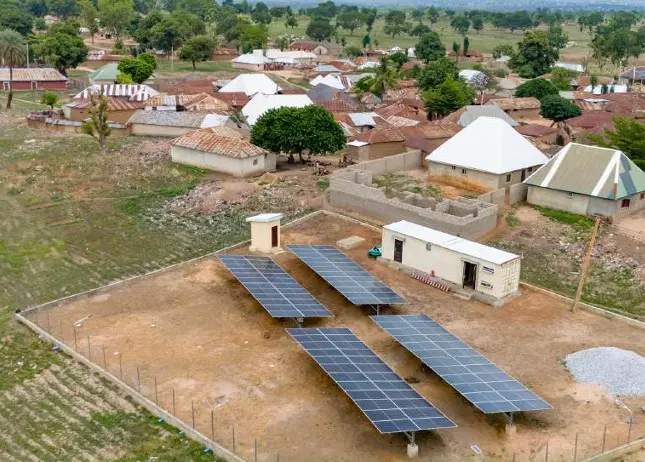
The Nigeria Solar Mini-Grids program marks a major step in expanding electricity access across the country as the government launches a $750 million renewable energy initiative. The project aims to install 1,350 solar mini-grids in rural and underserved communities where reliable electricity has remained a persistent challenge.
Access to stable electricity remains a major obstacle for many households and businesses in Nigeria. Frequent power outages and limited grid coverage force millions of people to rely on alternative energy sources such as petrol and diesel generators. These generators are expensive to operate and contribute to environmental pollution.
Through the Nigeria Solar Mini-Grids initiative, the government plans to introduce decentralized renewable energy systems that generate electricity locally. These mini-grids can operate independently from the national grid, making them ideal for remote communities where connecting to large transmission networks is difficult or uneconomical.
Solar mini-grids function as localized power systems that produce and distribute electricity within a specific area. By generating power close to where it is used, these systems reduce transmission losses and improve energy reliability for communities that have historically lacked stable electricity supply.
The Nigeria Solar Mini-Grids project will focus primarily on rural areas where power infrastructure is limited or absent. Many villages across Nigeria remain off-grid, meaning they have never been connected to the national electricity system. For these communities, solar mini-grids offer a practical solution that can deliver clean and affordable energy.
Reliable electricity has the potential to transform rural economies. Access to power enables small businesses to operate more efficiently, allows schools and health centers to function effectively, and improves the overall quality of life for residents.
In addition to supporting off-grid communities, part of the Nigeria Solar Mini-Grids program will also strengthen the national electricity system. Around 250 of the planned mini-grids will be connected to the existing grid network.
These grid-connected systems will supply renewable electricity directly into the national power infrastructure. This integration is expected to improve stability in regions where electricity supply remains weak or inconsistent.
Nigeria’s national grid has struggled for decades with insufficient capacity and frequent disruptions. Integrating solar mini-grids into the broader power system could help address these challenges by adding new renewable generation sources.
The Nigeria Solar Mini-Grids initiative also highlights the importance of collaboration between the public and private sectors. While the Nigerian government has committed $750 million to launch the program, authorities expect additional investment from private companies and financial institutions.
Officials estimate that private sector participation could bring the total investment associated with the project to approximately $1.1 billion. This additional funding would accelerate the rollout of solar mini-grids and support long-term maintenance of the energy systems.
Private investment plays a critical role in expanding renewable energy infrastructure. Many large-scale energy projects require financial resources and technical expertise that governments alone cannot provide.
By encouraging private sector involvement, the Nigeria Solar Mini-Grids program aims to create a sustainable model for expanding electricity access. Investors can support the development of solar infrastructure while communities benefit from improved energy services.
Nigeria’s increasing focus on solar energy reflects broader global trends toward cleaner power generation. Renewable energy technologies are becoming more affordable and efficient, making them a practical option for expanding electricity supply.
Solar power in particular offers strong advantages in countries with abundant sunlight. Nigeria’s geographic location provides excellent solar potential, allowing solar systems to generate electricity throughout much of the year.
The shift toward solar mini-grids also addresses the high costs associated with fuel-powered generators. Across Nigeria, millions of households rely on small petrol or diesel generators to meet their daily electricity needs.
These generators produce noise and air pollution while consuming costly fuel. For small businesses and households, operating generators can represent a significant financial burden.
The Nigeria Solar Mini-Grids program seeks to replace these generators with cleaner energy alternatives. Solar power systems produce electricity without emitting greenhouse gases or harmful pollutants.
Reducing reliance on fossil fuel generators will help improve air quality while lowering energy costs for communities.
The initiative also aligns with Nigeria’s broader environmental goals. The country has committed to expanding renewable energy use as part of its strategy to reduce carbon emissions and promote sustainable development.
Previous programs such as the Nigeria Electrification Project have already introduced renewable technologies to expand electricity access. The Nigeria Solar Mini-Grids program builds on these efforts by scaling up solar power deployment across multiple regions.
Improving electricity access remains a key priority for Nigeria’s economic development. Reliable power supply supports industries, encourages investment, and creates opportunities for innovation and entrepreneurship.
In rural areas, electricity access can transform local economies by enabling agricultural processing, refrigeration, and digital connectivity. Farmers can store crops more effectively, small businesses can operate longer hours, and communities gain access to communication technologies.
The Nigeria Solar Mini-Grids project could therefore play a major role in strengthening rural development. Reliable energy enables economic activity while improving social services such as education and healthcare.
Access to electricity also supports digital inclusion. As more communities gain power supply, residents can connect to online services, mobile banking platforms, and digital learning tools.
The expansion of solar mini-grids could therefore contribute to Nigeria’s broader digital transformation by ensuring that rural communities have the infrastructure needed to participate in modern economic activities.
If the program succeeds, the installation of 1,350 solar mini-grids could bring electricity to millions of Nigerians who currently live without reliable power. This would represent a major milestone in the country’s efforts to achieve universal electricity access.
The Nigeria Solar Mini-Grids initiative also demonstrates how renewable energy solutions can address both economic and environmental challenges. By combining clean energy technology with strategic investment, Nigeria is moving toward a more resilient and sustainable power system.
For many communities across the country, the success of this program could mark the beginning of a new era of reliable, affordable, and environmentally friendly electricit