The International Monetary Fund projects a positive trajectory for Nigeria’s economic expansion. In its latest World Economic Outlook Update, the Fund forecasts that Nigeria’s economy will grow by 4.4 percent in 2026. This represents an increase from a projected 4.2 percent growth in 2025. The IMF attributes this improved outlook to the continued impact of government reforms and stabilizing macroeconomic conditions. This data will be formally released during a hybrid press conference in Brussels on January 19, 2026.
The report places Nigeria’s performance within broader regional and global contexts. Across sub-Saharan Africa, growth is expected to strengthen from 4.4 percent in 2025 to 4.6 percent in both 2026 and 2027. This regional acceleration stems from widespread macroeconomic stabilization and structural reforms. For Nigeria specifically, the ongoing reform momentum and a resilient services sector underpin the forecast. Consequently, the IMF’s projection suggests confidence in the current policy direction’s ability to sustain growth.
Reform Momentum Drives Cautious Optimism
The IMF’s outlook indicates that difficult policy decisions are beginning to yield results. Reforms in Nigeria have focused on fiscal consolidation, exchange rate management, and subsidy adjustments. These measures aim to correct long-standing macroeconomic imbalances. While often causing short-term hardship, the Fund’s analysis suggests they are fostering a more stable foundation for growth. The projection that Nigeria’s economy will grow at an accelerating pace reflects this assessment of reform efficacy.
However, the growth forecast remains moderate. It underscores the gradual nature of economic recovery and the challenges that persist. The 4.4 percent figure for 2026 is a positive sign but not a dramatic surge. It implies a steady, reform-supported expansion rather than a rapid boom. This measured optimism is a common theme in the IMF’s analysis, balancing recognition of progress with an awareness of the structural hurdles that remain.
Global and Regional Economic Context
Globally, the IMF expects growth to hold broadly steady. It projects worldwide expansion of 3.3 percent in 2026 and 3.2 percent in 2027. This represents a slight deceleration from 2025. The report notes that high-technology sector momentum is moderating, though it continues to offset weaker activity elsewhere. Emerging market and developing economies remain the primary engines of global growth. Notably, India is forecast to lead major economies at 6.4 percent, while China is projected to grow at 4.5 percent.
Within sub-Saharan Africa, Nigeria’s 4.4 percent growth places it just below the regional average of 4.6 percent. Other key regional economies are also showing improved prospects due to similar stabilization efforts. The IMF’s regional outlook suggests a period of consolidating gains rather than explosive growth. This environment means Nigeria’s performance is competitive, though not leading the continent. The focus remains on sustaining reform implementation to unlock higher potential.
Read Also
10 Best Side Hustles in Kenya for Money in 2026
Easy Kenyan Chapati Recipe (Soft and Layered in 30 Mins)
Risks and Structural Challenges Remain
The IMF report includes significant cautionary notes. It warns that global risks remain tilted to the downside. Current resilience is concentrated in a few sectors and is often policy-supported, leaving economies vulnerable to shocks. For Nigeria, this underscores the importance of deepening and broadening reforms. Over-reliance on any single sector, including services, could pose a risk if global conditions shift. The need for diversification and investment in productivity remains critical.
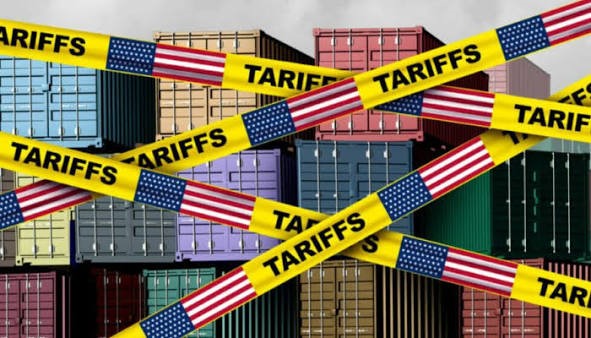
Furthermore, the Fund highlights that growth outlooks have seen significant revisions across individual countries. This variability points to an uneven global recovery. Nigeria’s upward revision is a positive signal, but it exists within a volatile international landscape. Factors like trade tensions, commodity price fluctuations, and geopolitical uncertainty could still affect the trajectory. Therefore, the projection that Nigeria’s economy will grow at 4.4 percent is contingent on both continued domestic reform and a stable external environment.
Implications for Policy and Investment
The IMF’s forecast provides a benchmark for policymakers and investors. It validates the current reform path but also sets expectations for continued discipline. To meet and exceed the 2026 projection, authorities must maintain reform consistency. Key areas include further improving the business climate, investing in infrastructure, and enhancing human capital. Private sector investment will be crucial to translate macroeconomic stability into job creation and inclusive growth.
For the international community, the report may bolster confidence in Nigeria’s medium-term prospects. A stable and growing Nigerian economy is vital for regional stability and trade. The scheduled press conference, led by senior IMF officials, will provide further detail and context. Analysts will scrutinize the nuances behind the numbers for signals on fiscal health, debt sustainability, and social indicators. Ultimately, the projection offers a cautiously optimistic narrative that Nigeria’s economy is on a healing path.