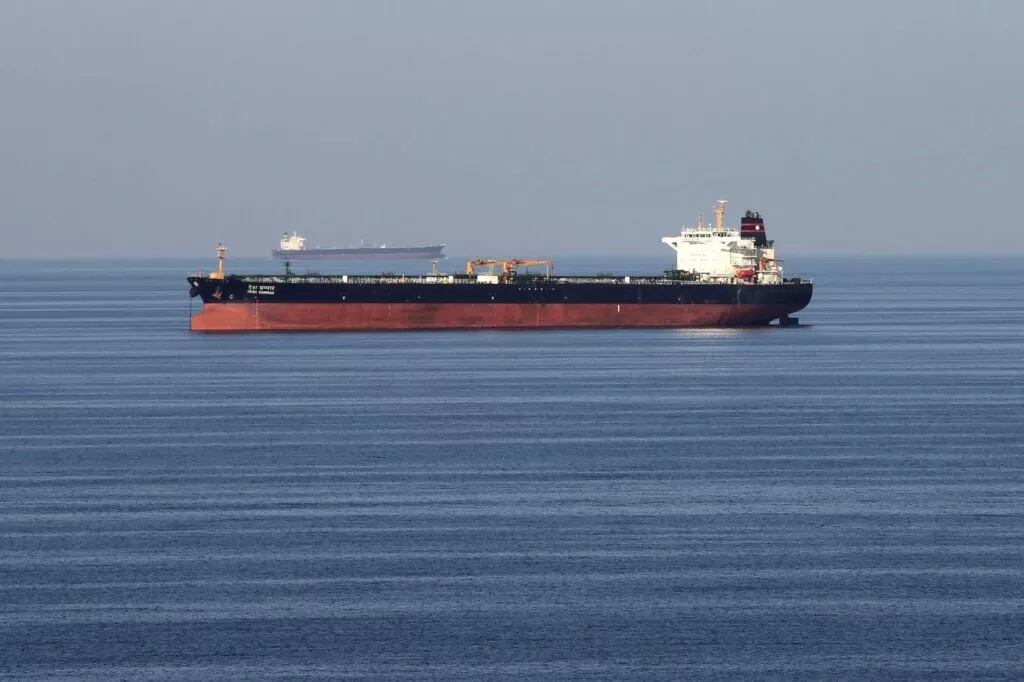
Strait of Hormuz oil flows are back in sharp focus as rising tensions between the United States and Iran trigger fresh fears across global energy markets. Analysts warn that even limited disruption could send shockwaves through oil prices and supply chains.
The renewed concern follows reports that U.S. President Donald Trump is considering a range of actions against Iran. These deliberations come as Tehran faces domestic unrest and mounting international pressure. As a result, investors and energy experts are closely watching developments in the Persian Gulf.
The Strait of Hormuz remains one of the world’s most critical energy chokepoints. Nearly a third of all seaborne crude oil passes through the narrow waterway. Any threat to its security carries global implications.
Why Strait of Hormuz oil matters to the world
The Strait of Hormuz connects the Persian Gulf to the Arabian Sea. It serves as the main export route for oil producers such as Saudi Arabia, Iraq, the United Arab Emirates, and Iran.
In 2025, about 13 million barrels of crude oil per day transited the strait. That figure represents roughly 31 percent of global seaborne oil flows, according to market intelligence firm Kpler.
Also read: China should be wary of US proposals to protect the Hormuz Strait
Because of this volume, Strait of Hormuz oil disruptions are among the most serious risks facing energy markets. Even brief interruptions can drive price volatility and disrupt refining operations worldwide.
Also read: Dangote Takes on Nigeria’s Regulator Over Fuel Imports
U.S.-Iran tensions raise disruption fears
Recent reports suggest Washington is weighing selective military options against Iran. Although no action has been confirmed, the possibility alone has raised alarm.
Industry experts caution that military pressure could provoke Iran into threatening shipping through the strait. Historically, Tehran has used the chokepoint as leverage during periods of heightened tension.
According to Saul Kavonic of MST Marquee, any confrontation could push Iran toward extreme measures. He warned that desperation could lead to actions with global consequences.
Potential oil price impact
Analysts broadly agree that fear alone could move prices higher. However, a full closure would be far more severe.
Andy Lipow of Lipow Oil Associates said a complete shutdown could add between $10 and $20 per barrel to oil prices. Even rumors of disruption could push prices up by several dollars.
At present, Brent crude trades near $63 per barrel. Meanwhile, U.S. West Texas Intermediate hovers around $59. A major shock would quickly change those levels.
How likely is a full closure?
Despite the risks, most analysts see a low probability of a sustained shutdown. Several factors limit Iran’s ability to fully block the strait.
First, the U.S. Navy maintains a strong presence in the region. Allied forces also patrol key shipping lanes. This makes long-term closure difficult.
Second, Iran itself depends on Strait of Hormuz oil exports. Blocking the route would harm its own economy and alienate key partners, including China.
Muyu Xu of Kpler noted that even harassment of tankers would have limited physical impact. In her view, Iran lacks the capacity to sustain a full blockade.
Selective disruption still a concern
While a total closure appears unlikely, selective disruption remains possible. These actions could include brief blockages, drone threats, or tanker seizures.
Such incidents would still affect market sentiment. Traders tend to react quickly to geopolitical risk, especially when supply routes are involved.
Bob McNally of Rapidan Energy Group estimates a 70 percent chance of selective U.S. strikes on Iran. However, he emphasized that escalation risks would depend on how Tehran responds.
Global supply buffers offer some relief
Current market conditions may soften the immediate impact of disruption. Kpler estimates the oil market is tilting toward oversupply.
Excess supply stands at about 2.5 million barrels per day in January. It is expected to exceed 3 million barrels per day in February and March.
These buffers could limit the duration of price spikes. Still, they would not eliminate volatility, especially if geopolitical tensions persist.
Comparison with past crises
Some observers compare the Iran situation to U.S. pressure on Venezuela. However, experts caution against direct parallels.
Iran’s role in global energy is far larger. Its exports and transit exposure exceed those of Venezuela by a wide margin.
Xu stressed that the Middle East’s geopolitical complexity also changes the equation. Unlike Latin America, the region involves multiple power centers and alliances.
Likely policy approach
Analysts believe Washington is more likely to rely on sanctions and enforcement than direct infrastructure attacks.
Lipow suggested that a Venezuela-style strategy in Iran would focus on economic pressure rather than occupation. This approach would aim to avoid triggering wider conflict.
Nevertheless, uncertainty remains high. Markets will continue reacting to headlines and diplomatic signals.
Strait of Hormuz oil remains a global flashpoint
As tensions evolve, Strait of Hormuz oil will remain a central concern for policymakers and investors alike. The waterway’s strategic importance ensures that any threat receives immediate attention.
Even without direct conflict, the risk premium tied to the strait is likely to persist. Energy markets will stay sensitive to developments between Washington and Tehran.
Tensions between the U.S. and Iran put global energy markets on edge as analysts warn any disruption could spike prices in Strait of Hormuz oil Strait of Hormuz oil